
As a parent, you’ve probably wondered when your child should first see an orthodontist. The short answer? Earlier than most people think. Early orthodontic treatment gives your child the best chance at a healthy, confident smile by addressing bite and jaw concerns while their body is still growing. At Icon Orthodontics, Dr. Sarpotdar and Dr. Sun help families understand what early care looks like and whether it’s the right fit for their child.
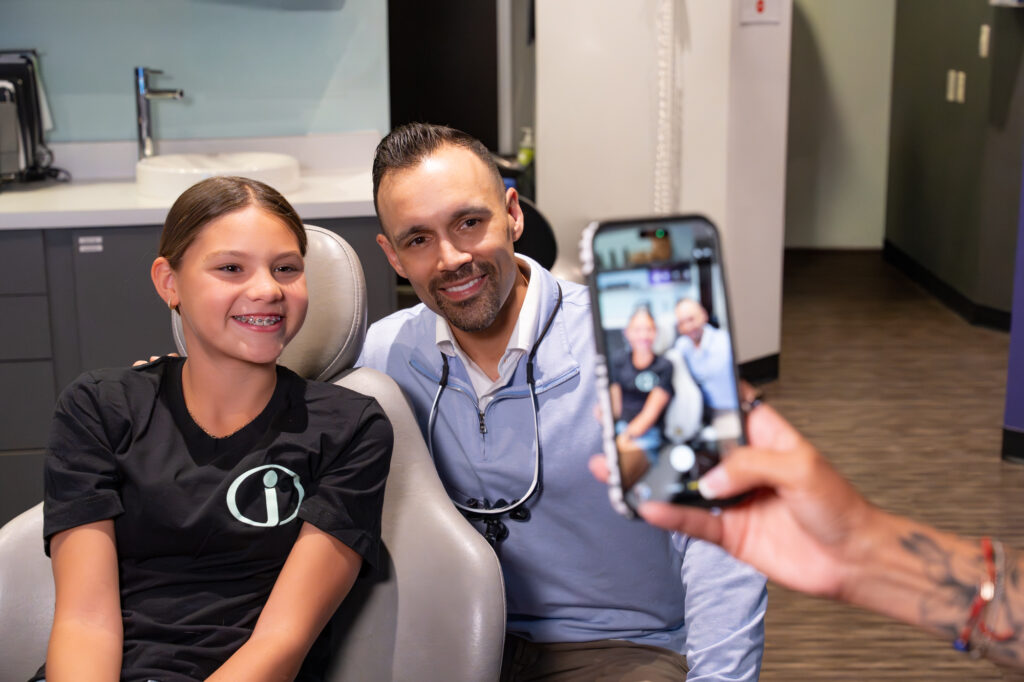
What Is Early Orthodontic Treatment (Phase 1)?
Early orthodontic treatment, also called Phase 1 or interceptive orthodontics, is specialized care for children ages 6 to 10. It focuses on guiding jaw growth and correcting bite concerns before all permanent teeth come in. The American Association of Orthodontists recommends every child have their first orthodontic checkup by age 7.
At this age, your child has a mix of baby and adult teeth. That mix gives Dr. Sarpotdar and Dr. Sun a clear window to spot concerns early, when the jaw is still developing and more responsive to gentle guidance. Baby teeth act as natural placeholders, and the way they fall out influences how adult teeth settle in.
Here’s the good news: most kids don’t actually need Phase 1 treatment. An evaluation simply helps us determine whether early care would benefit your child or whether it’s better to wait. Either way, you walk away with answers and a clearer picture of what to expect over the next few years.
Icon Orthodontics offers a free smile exam for families, so it’s easy to find out where your child stands. Dr. Sarpotdar and Dr. Sun will take a look, explain what they see, and give you honest guidance without any pressure to start treatment before it’s truly needed.
How Phase 1 and Phase 2 Work Together
Two-phase treatment is a planned approach. Think of it as two shorter chapters rather than one long one. Each phase has a specific purpose, and together they help set your child up for a healthy adult smile.
Here’s how the timeline typically unfolds:
- Phase 1 (ages 6–10): This phase guides jaw growth, creates space for incoming permanent teeth, and corrects habits like thumb sucking that affect bite development. Treatment usually lasts 9 to 18 months.
- Resting period (1–3 years): After Phase 1, your child takes a break. During this time, Dr. Sarpotdar and Dr. Sun monitor the remaining permanent teeth as they come in. Your child may join our Puggle Patrol Kids Club for regular check-ins.
- Phase 2 (ages 11–14): Once most permanent teeth have erupted, Phase 2 focuses on final alignment using braces or clear aligners. This phase typically runs 12 to 24 months.
Common Phase 1 appliances include:
- Palatal expanders to widen a narrow upper jaw
- Partial braces on select front teeth
- Space maintainers when baby teeth are lost early
- Habit appliances to help stop thumb sucking or tongue thrust
Not every child needs both phases. Some kids do great with just Phase 1, others only need Phase 2 as a teen, and many don’t need treatment at all. Your friendly doctor will walk you through what makes sense based on your child’s specific growth pattern.
Key Benefits of Starting Treatment Early
When Phase 1 is the right call, the benefits can shape your child’s smile for years to come. Early care takes advantage of natural growth, which often means simpler treatment overall. Below are the main advantages, broken down into the most common questions parents ask.
How does early treatment guide jaw growth?
A growing jaw responds well to gentle correction. Once growth slows in the teen years, some bite concerns become harder to address without more involved treatment. Starting earlier lets your friendly doctor work with your child’s biology rather than against it, using light forces to shape jaw development over time.
Can Phase 1 create room for permanent teeth?
Yes. An expander or spacer can make room for adult teeth to erupt properly. In some cases, this reduces the need for tooth extractions later. When crowding is spotted early, a simple appliance can prevent more involved treatment down the road.
Does early treatment protect teeth from injury?
Kids with front teeth that stick out are more likely to chip or break them during sports or play. Pulling those teeth back lowers that risk. For active kids, this benefit alone can be a strong reason to consider Phase 1 care.
Will early care correct harmful oral habits?
Thumb sucking, tongue thrust, and chronic mouth breathing can reshape the bite over time. Early appliances help break these patterns before they cause lasting changes to the teeth or jaw structure. Catching these habits sooner often leads to better long-term outcomes.
Does Phase 1 shorten Phase 2?
Often, yes. When Phase 1 addresses the foundation, Phase 2 treatment is usually faster and less complex. Your child spends less total time in braces or aligners, and the finishing work goes more smoothly.
Will early treatment boost confidence?
School-age kids notice their smiles. Fixing a visible bite concern early can make a real difference in how your child feels about themselves at school, at sports, and in photos. That kind of confidence can carry into the teen years and beyond.
Dr. Sarpotdar and Dr. Sun take a no-pressure approach. If early treatment isn’t needed, they’ll tell you plainly. If it is, they’ll explain exactly why and what the plan looks like.

Phase 1 vs. Phase 2 Orthodontics: What’s the Difference?
Phase 1 and Phase 2 serve different goals at different ages. Phase 1 focuses on jaw growth and creating space during the mixed-tooth years (ages 6–10). Phase 2 focuses on final tooth alignment once all permanent teeth are in (ages 11–14). Here’s a side-by-side look:
| Feature | Phase 1 (Early Treatment) | Phase 2 (Adolescent Treatment) |
|---|---|---|
| Age range | 6–10 years | 11–14 years |
| Teeth stage | Mixed baby and permanent | Mostly or all permanent |
| Main focus | Jaw growth, space creation, habits | Final tooth alignment and bite |
| Common appliances | Expanders, partial braces, space maintainers, habit appliances | Full braces or clear aligners |
| Typical duration | 9–18 months | 12–24 months |
| Resting period after? | Yes, 1–3 years | No; treatment is complete |
So when does two-phase treatment make sense? Usually when a child has a significant bite concern, a narrow jaw, severe crowding, or a habit that’s affecting development. In those cases, waiting until the teen years can mean more complex treatment later.
Single-phase treatment (just Phase 2) works well for kids with milder spacing or alignment concerns that don’t involve jaw growth. The best way to know which path fits your child is a free smile exam. Dr. Sarpotdar and Dr. Sun will share what they recommend and why, so you can decide what’s right for your family.
What Shapes an Early Orthodontic Treatment Plan?
Every Phase 1 plan is different and depends on several factors, including case complexity, the type of appliances needed, and how long treatment lasts. Most families find that early care is worthwhile because it often reduces the time and complexity of Phase 2 later.
What factors influence your child’s plan?
A few things shape Phase 1 care:
- Case complexity. A simple expander is a lighter plan than a combination of appliances.
- Treatment length and visits. Longer plans require more appointments.
- Insurance orthodontic benefits. Many dental plans include orthodontic coverage with a lifetime maximum. We’ll help you understand what applies.
Are there flexible ways to pay?
Icon Orthodontics offers easy financing with payment plans that fit your family’s budget. Your free smile exam includes a clear breakdown of recommended treatment, with no pressure to commit to a plan until you’re ready.
Signs Your Child May Need Early Orthodontic Care
Not sure if your child needs an orthodontic evaluation? There are a few signs worth watching for at home. Many are easy to spot during regular tooth brushing or mealtime.
What should parents watch for?
Consider scheduling a checkup if you notice:
- Crowded, gapped, or overlapping permanent teeth as they come in
- Crossbite, underbite, overbite, or open bite when your child closes their mouth
- Thumb sucking or pacifier use past age 5
- Mouth breathing during the day or while sleeping
- Difficulty chewing or biting food
- Early or late loss of baby teeth compared to siblings or classmates
- Jaw shifting or clicking when opening and closing
- Teeth that don’t meet properly or meet in an unusual way
What if I don’t see any of these signs?
Even if you don’t spot anything concerning, the AAO recommends an orthodontic checkup by age 7. It’s the age when the first adult molars typically appear, giving Dr. Sarpotdar and Dr. Sun a clear picture of how your child’s bite is developing.
Icon Orthodontics welcomes families for a free smile exam. There’s no referral needed to find out where your child stands. If early treatment isn’t recommended, your child can join our Puggle Patrol Kids Club, where we monitor growth and tooth eruption until the right time for any treatment.

Frequently Asked Questions About Early Orthodontic Treatment
At what age should my child first see an orthodontist?
The American Association of Orthodontists recommends a first orthodontic checkup by age 7. By this age, enough permanent teeth have come in for an orthodontist to spot concerns with jaw growth, spacing, or bite. Even if no treatment is needed, this early visit creates a baseline so any changes can be caught early.
Does every child need Phase 1 treatment?
No. Most children don’t need Phase 1 treatment. The purpose of an early evaluation is to find out whether your child would benefit from early care or whether it’s better to wait until more permanent teeth have come in. Dr. Sarpotdar and Dr. Sun will give you an honest recommendation based on what they see.
How long does Phase 1 orthodontic care take?
Phase 1 treatment typically lasts 9 to 18 months, depending on your child’s specific needs. Some cases, like a simple expander, wrap up on the shorter end. More involved plans may run a bit longer. Your friendly doctor will give you a clear timeline at your free smile exam.
Can my child get clear aligners instead of braces for early treatment?
Clear aligners can sometimes be used in Phase 1, but many early treatment plans rely on specific appliances like expanders or habit appliances that aligners can’t replace. For Phase 2, when all permanent teeth are in, clear aligners are a great option for many teens. Dr. Sarpotdar and Dr. Sun will discuss what works best for your child’s situation.
Will my child still need braces later?
Possibly. Phase 1 treatment addresses the foundation (jaw growth and space), but it doesn’t typically handle final alignment of all permanent teeth. Many kids who complete Phase 1 still need Phase 2 treatment as teens to finish the work. The good news is that Phase 2 is often shorter and simpler because of the groundwork laid earlier.
Does insurance cover early orthodontic treatment?
Many dental insurance plans include orthodontic benefits that apply to both Phase 1 and Phase 2 treatment, usually up to a lifetime maximum. Coverage varies by plan. Our team at Icon Orthodontics will help you understand your benefits and walk through flexible financing options so care fits your family’s budget.
Curious whether early orthodontic care is the right next step for your child? Learning the signs now gives you time to plan ahead, and a quick evaluation can bring real peace of mind. Say hello to your friendly doctor, and let’s start inspiring smiles together.